

As a therapy provider, whether you’re a physical therapist, mental health professional, or occupational therapist, credentialing is a critical process that ensures you get paid fairly for the services you provide. Without the right credentialing, you risk not being reimbursed by insurance companies, limiting your ability to grow your practice and serve more patients.
In 2026, the credentialing landscape is more complex than ever due to changing insurance regulations, payer requirements, and state-specific rules. Proper credentialing with insurance companies opens the door to reimbursement, but it also improves your credibility, patient base, and overall practice stability.
This guide will walk you through the step-by-step process of credentialing, the benefits it brings, and how you can leverage Velatrixa to simplify the process and focus more on patient care.
Why Do Patients Value Therapy Providers Who Are Credentialed?
Being credentialed with insurance companies isn’t just important for you; it matters to your patients, too. Here’s why:
1. Insurance Utilization
For many patients, insurance coverage is a deciding factor when choosing a healthcare provider. HealthMarkets reports that 63% of patients choose providers based on whether their insurance is accepted. If you aren’t credentialed with major insurance carriers, you may miss out on a large portion of potential clients who rely on their insurance to cover the costs of therapy.
For example:
- A mental health patient who relies on Medicaid or Medicare might not be able to see you if you’re out-of-network.
- A physical therapy patient with private insurance may prefer an in-network provider to reduce their out-of-pocket costs.
2. Cost Savings for Patients
Being in-network with insurance providers can help reduce patients’ out-of-pocket costs. When you’re credentialed, you’re able to charge the rates set by the insurance company, which are often more affordable for patients than paying full price or seeking out-of-network care. This makes your services more accessible to a wider audience.
3. Expanding Coverage for Holistic Care
More and more insurance plans are starting to cover holistic care such as chiropractic treatments, mental health therapy, and physical rehabilitation. Credentialing allows you to tap into this growing demand and offer more integrated care options. As patients increasingly seek comprehensive care that includes a combination of therapies, being credentialed ensures you are part of that solution.
4. Attracting More Patients
78% of Americans rely on insurance for healthcare. Credentialing ensures that you can tap into this large market of insured patients. Whether you’re offering psychotherapy, occupational therapy, or physical therapy, your practice will become more visible and accessible to patients who prefer to use their insurance benefits for their treatment.
5. Building Credibility
Insurance networks and patients alike value professionalism. Being in-network with major insurers signals that you meet their standards, which fosters trust with your patients. It proves you have the necessary credentials, experience, and qualifications to provide high-quality care.
Steps to Improve Therapy Credentialing Successfully
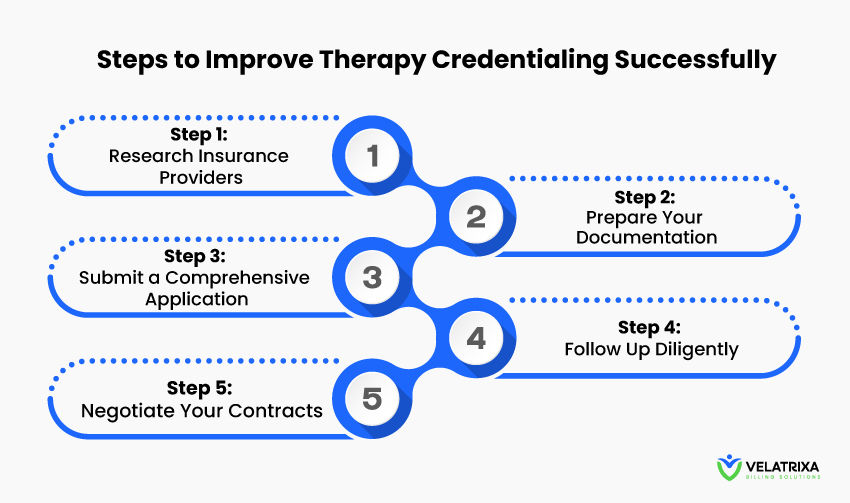
While the credentialing process can be complex, breaking it down into manageable steps can make it much easier. Here’s a detailed, step-by-step approach to improving your credentialing:
Step 1: Research Insurance Providers
Before diving into the credentialing process, it’s essential to research which insurance companies align best with your practice’s goals. Not all insurance networks are created equal, and some may offer better reimbursement rates or cater to a patient demographic that fits your specialties.
When researching, keep the following in mind:
- Reimbursement Rates: Are the insurance companies offering rates that allow you to be fairly compensated for the therapy you provide? For example, some insurance companies offer higher rates for mental health services than others.
- Patient Base: Does the insurance network cater to your target patient demographic? For example, if you specialize in pediatric physical therapy, you’ll want to research networks that cover children and families.
- Requirements: Each insurance company will have different credentialing requirements. Some may require additional documentation, certifications, or specific licenses. Make sure you understand these before moving forward.
Step 2: Prepare Your Documentation
The most common reason for delays or rejections in the credentialing process is missing or inaccurate documentation. To prevent this, gather and verify the following documents:
- State Licenses: Ensure that your state license is active and up-to-date. Your state’s licensing board may have additional rules for healthcare professionals.
- National Provider Identifier (NPI): Your NPI is a unique identification number for healthcare providers. This is required for Medicare and Medicaid as well as many private insurers.
- Malpractice Insurance: Provide proof of malpractice insurance to ensure you are covered for any potential claims.
- Educational Credentials: Include transcripts or certificates for your degree and specialty training.
- Training and Certification Records: Ensure all professional development and certifications, like continuing education courses, are up to date.
Step 3: Submit a Comprehensive Application
Once you’ve gathered all the necessary documents, the next step is to submit your application. Many insurance companies now offer digital submission portals, which can expedite the process.
When submitting, make sure to:
- Double-check for errors: Review all documents for accuracy and completeness.
- Include all required documents: Missing paperwork can lead to delays or denials.
- Provide accurate billing information: Make sure your tax identification number (TIN) and other billing details are correctly entered.
Step 4: Follow Up Diligently
The credentialing process can take anywhere from 90 days to 6 months. It’s crucial to stay proactive and follow up regularly on the status of your application. Address any requests for additional information quickly to avoid delays.
Step 5: Negotiate Your Contracts
Once you are credentialed, don’t just accept the first offer. Take time to negotiate your reimbursement rates to ensure they reflect the value of the therapy you’re providing. Contract negotiations are critical to ensuring that you are fairly compensated and are working with an insurance provider that aligns with your practice’s values and goals.
Credentialing Benefits for Therapy Practices
Beyond the paperwork, credentialing offers several strategic benefits that can grow your therapy practice:
- Broaden Your Reach: Credentialing allows you to join major insurance networks, connecting you to a larger pool of patients. This will likely increase your appointment volume by up to 40%.
- Enhance Patient Retention: Being in-network improves patient trust and satisfaction, as patients prefer to stick with their insurance plan and return for care.
- Diversify Your Revenue: Credentialing makes it easier to expand into services like massage therapy, occupational therapy, and rehabilitation, thus broadening your revenue streams.
- Boost Your Credibility: Being credentialed with insurance companies signals that you meet industry standards, making your practice more attractive to both patients and peers.
Common Credentialing Challenges & How to Overcome Them
Credentialing comes with its share of challenges, but by anticipating these obstacles and having strategies in place, you can avoid delays and rejections.
1. Lengthy Process
Credentialing is a time-consuming process, often taking several months. Start early, and consider outsourcing the process to Velatrixa to reduce administrative burden.
2. Rejections
Rejections are often due to incomplete applications. Ensure your documentation is complete, accurate, and up-to-date.
3. Administrative Burden
Managing multiple insurance contracts can be overwhelming. Consider using specialized software or working with trained staff to keep track of the process.
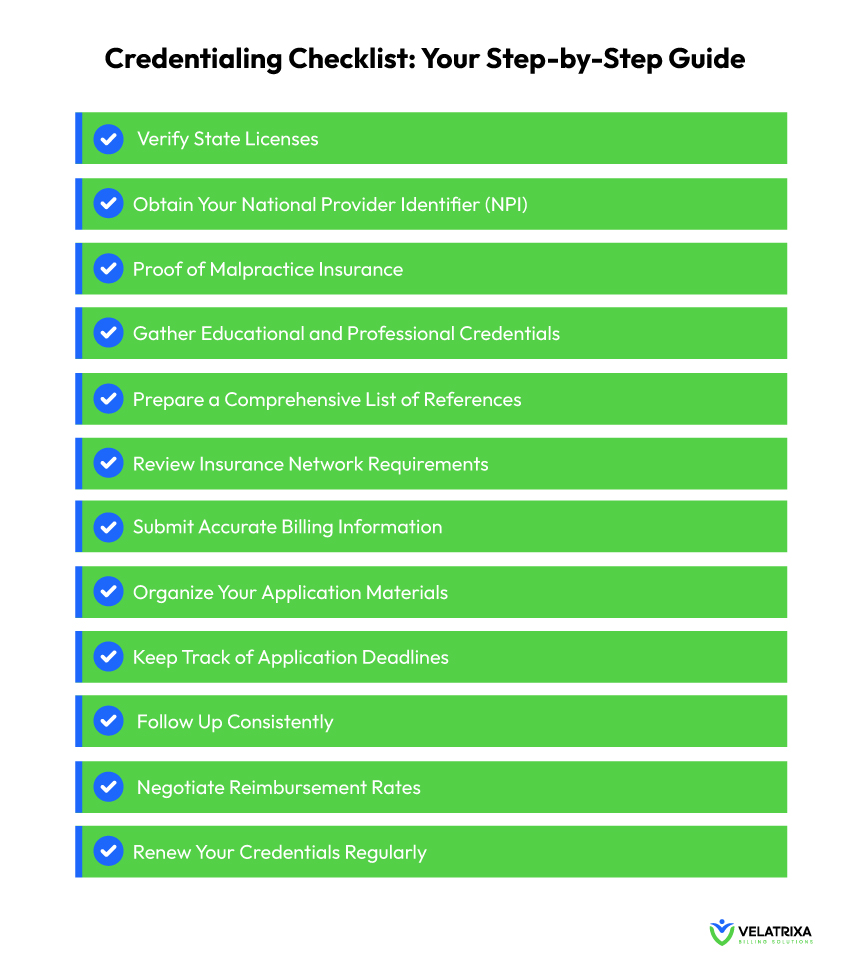
Credentialing Checklist: Your Step-by-Step Guide
Credentialing can be a complex process, but having a checklist can make it much more manageable. Here’s a comprehensive credentialing checklist to help ensure you stay on track:
How to Maximize the Impact of Being Credentialed
Once credentialed, you want to maximize its benefits. Here are a few strategies:
- Market Your In-Network Status: Display which insurance plans you accept on your website and marketing materials to attract insured patients.
- Stay Updated on Policies: Keep track of any changes in insurance guidelines and periodically review your contracts to ensure they remain favorable.
- Outsource Medical Billing: Let Velatrixa handle your medical billing to reduce administrative overhead and improve the efficiency of your practice’s revenue cycle.
How Velatrixa Can Help Therapy Providers with Credentialing
Credentialing doesn’t have to be stressful. Velatrixa is here to assist with every step of the process. From document preparation to application submission and follow-up, we make sure your credentialing process is smooth, fast, and compliant.
Here’s how we can help:
- Accurate Documentation: We ensure all the necessary paperwork is complete and correct.
- State-Specific Strategies: We provide tailored solutions to help you meet state-specific credentialing requirements.
- Telehealth Billing Integration: We integrate telehealth billing to ensure you are compensated for virtual therapy sessions.
- Efficient Claim Tracking: We monitor the status of your claims, ensuring quick payment processing and reducing delays.
Conclusion:
Credentialing is not just a regulatory task; it’s a strategic move to grow your therapy practice in 2026. With Velatrixa by your side, you can streamline the credentialing process, ensuring that your practice is compliant, efficient, and well-paid.
Contact us today to get started with Velatrixa and elevate your practice to new heights!
FAQs
What is therapy credentialing and why is it important?
Therapy credentialing is the process of becoming an approved provider with insurance companies. It ensures you get paid for the services you provide and increases your credibility, helping you attract more patients.
How long does the credentialing process take?
The credentialing process typically takes between 90 days to 6 months. It depends on the insurance company and the complexity of the application.
Can I provide therapy without being credentialed?
Yes, but you will likely miss out on a large number of patients who rely on insurance. Being credentialed is crucial for reimbursement and expanding your patient base.
What documents do I need for credentialing?
You will need state licenses, National Provider Identifier (NPI), proof of malpractice insurance, educational credentials, and professional certifications, among others.
What are the benefits of being credentialed with insurance companies?
Being credentialed allows you to attract more patients, improve your revenue through insurance reimbursements, and build credibility in the healthcare community.
How do I know which insurance providers to apply with?
Research reimbursement rates, patient demographics, and credentialing requirements for each insurance provider to find the best fit for your practice.
Can I negotiate my reimbursement rates after being credentialed?
Yes, you can negotiate reimbursement rates with insurance companies once credentialed. It’s important to ensure the rates align with the value of your services.
How often do I need to renew my credentials?
Credentials need to be renewed periodically, often every 1-3 years. Check with each insurer and licensing board for specific renewal timelines.
What happens if my credentialing application is rejected?
Rejections typically happen due to incomplete or incorrect documentation. Ensure all materials are accurate and complete before submitting, and follow up if necessary.
Do I need to be credentialed for telehealth services?
Yes, if you provide telehealth services, you need to be credentialed with insurance companies that cover virtual sessions to ensure reimbursement.
How can I reduce the administrative burden of credentialing?
Outsourcing to a service like Velatrixa can help streamline the process, reduce paperwork errors, and manage the tracking of applications and renewals efficiently.