

Family medicine billing is the process of accurately coding, submitting, and managing insurance claims for services provided in primary care settings. It involves the use of CPT codes, ICD-10 diagnosis codes, and detailed clinical documentation to ensure providers receive timely and accurate reimbursement.
Family medicine billing services cover a wide spectrum of care, including preventive visits, chronic disease management, acute illness treatment, and routine check-ups. Because family physicians treat patients across all age groups and conditions, billing requires a multi-service coding approach aligned with payer-specific guidelines and medical necessity requirements.
An effective family practice billing workflow includes insurance eligibility verification, prior authorizations, accurate code selection, claim submission, payment posting, and denial management. Each step directly impacts revenue cycle performance and reimbursement timelines.
Industry data highlights the importance of getting this process right:
- Up to 15% of medical claims are denied on first submission, often due to coding or documentation errors
- Over 20–30% of claims require rework, increasing administrative costs and slowing cash flow
- Practices lose 5–7% of annual revenue due to preventable billing inefficiencies
With increasing payer scrutiny and evolving regulations in 2026, even minor errors in coding, modifier usage, or documentation can lead to claim denials, underpayments, or delayed reimbursements. This makes optimized family medicine billing services essential for improving clean claim rates, reducing denials, and maintaining consistent cash flow.
Why Accurate Family Medicine Billing Is Non-Negotiable
In 2026, accurate family medicine billing is no longer optional; it’s a critical driver of revenue, compliance, and operational efficiency. With primary care practices managing preventive care, chronic disease management, acute care, and wellness visits, even minor errors in CPT coding, ICD-10 selection, or documentation can have a significant financial impact.
- Nearly 15% of family medicine claims are denied on first submission, translating into thousands of dollars lost per month for medium-sized practices
- 5–7% of annual revenue is lost due to preventable coding or documentation errors
- Up to 30% of staff time is consumed correcting billing errors and managing denials, reducing focus on patient care
- Practices that implement accurate billing protocols can increase clean claim rates by 20–25%, significantly improving revenue flow.
Key Reasons Accurate Billing Matters
Accurate billing goes beyond avoiding denials; it directly impacts cash flow, compliance, and practice efficiency. Implementing precise coding, thorough documentation, and consistent workflows ensures that your family medicine practice captures every dollar earned while reducing administrative headaches.
1. Reduce Claim Denials and Accelerate Cash Flow
Denials caused by minor coding mistakes, missing modifiers, or insufficient documentation can delay payments by 30–45 days on average. Accurate billing ensures faster claim approval, fewer resubmissions, and predictable cash flow. For example, submitting E/M visits with proper modifiers and documentation can reduce rejections by up to 50%.
2. Protect Against Compliance Risks and Audits
Insurance providers, Medicare, and Medicaid have strict coding and documentation requirements. Inaccuracies can trigger payer audits, fines, or underpayments, costing practices tens of thousands annually. Accurate billing keeps your practice audit-ready and compliant.
3. Maximize Reimbursements and Recover Lost Revenue
Accurate coding ensures every service provided is billed correctly. Studies show that even a 1–2% improvement in billing accuracy can recover $50,000–$100,000 annually for a medium-sized family practice. Proper billing also reduces missed opportunities in chronic care management, preventive services, and vaccination claims, which are common revenue leaks.
4. Improve Operational Efficiency and Reduce Staff Burnout
Billing errors increase administrative workload, forcing staff to spend hours on claim corrections, payer follow-ups, and appeals. By implementing accurate billing practices, staff can redirect their focus to patient care, scheduling, and clinical documentation, improving both staff satisfaction and patient experience.
5. Maintain Patient Satisfaction and Trust
Billing errors not only impact revenue, but they can also frustrate patients. Incorrect charges, delayed statements, or denied claims can erode patient trust. Accurate billing ensures transparent and timely patient statements, which enhances overall patient satisfaction and retention.
For Example
Consider a family medicine practice with 2,000 monthly claims:
- A 15% denial rate could mean 300 claims rejected initially, requiring staff to rework claims and coordinate with payers.
- With an average reimbursement of $150 per claim, these denials represent $45,000 at risk each month.
- Implementing accurate billing practices can reduce denials by half, potentially recovering $22,500 monthly in lost revenue over $270,000 annually.
In short, every denied claim, delayed payment, or missed modifier directly impacts your revenue. Accurate family medicine billing is the most effective lever to protect your practice’s financial health, reduce administrative burden, and improve patient satisfaction in 2026.
Why Family Medicine Billing Is Complex in 2026
Family medicine billing has become increasingly complex in 2026 due to evolving payer requirements, diverse service offerings, and heightened regulatory scrutiny. Unlike specialty practices, family medicine providers manage a wide spectrum of care, from preventive visits and chronic disease management to acute illness treatment and wellness exams. This diversity creates unique billing challenges that can directly impact revenue.
Key Factors Driving Complexity
Family medicine billing in 2026 is more challenging than ever. A combination of diverse services, evolving payer rules, and high claim volumes creates unique hurdles that can directly impact revenue and operational efficiency. Below are the key factors driving this complexity.
1. Broad Range of Services
Family medicine practices handle patients of all ages and conditions, including preventive care, chronic disease management, pediatric care, geriatric care, and acute illnesses. Each type of visit requires its own CPT and ICD-10 codes, and misclassifying even one visit can lead to a denied claim or underpayment. The sheer variety of services makes billing far more complex than in specialty practices.
2. Increasingly Complex Coding Requirements
Coding in family medicine is rarely straightforward. Chronic care management, multi-problem E/M visits, and preventive services often involve time-based or service-specific CPT codes. For example, chronic care management (99490) requires a minimum of 20 minutes of documented care per patient per month, while preventive visits use age-based codes (99381–99397). Errors in code selection or documentation remain a leading cause of the 11–15% first-time claim denial rate.
3. Stricter Payer Scrutiny in 2026
Insurance companies and government payers have tightened documentation requirements for preventive care, chronic disease management, and telehealth services. Claims are now routinely reviewed for proper coding, modifier usage (-25, -59, -50), medical necessity documentation, and prior authorizations. Failing to meet these requirements can result in delayed payments, claim denials, or reduced reimbursements.
4. High Volume of Claims and Administrative Burden
Family medicine practices often submit hundreds to thousands of claims monthly. Even a small error rate of 2–3% can translate into significant financial losses. According to Experian Health, administrative inefficiencies and billing errors account for 5–7% of lost revenue annually, with staff spending up to 30% of their time correcting claim denials. Managing this volume efficiently is a constant challenge.
5. Evolving Telehealth and Regulatory Changes
With telemedicine becoming a core part of primary care, billing complexity has increased. Telehealth visits require separate CPT codes, proper modifier usage, and detailed documentation to meet payer guidelines. Practices that fail to adapt to these changes risk losing reimbursement for virtual care, a growing revenue stream in 2026.
Family medicine billing is complex because it combines diverse services, evolving payer rules, high claim volume, and telehealth requirements. Without accurate coding, robust documentation, and proactive revenue cycle strategies, practices face higher denial rates, lost revenue, and administrative burnout. Optimizing billing processes in 2026 isn’t optional it’s essential to protect your practice’s financial health.
Top Revenue Risks in Family Medicine Billing
Even small mistakes in family medicine billing can have a big impact on revenue. Identifying and addressing the most common risks ensures your practice maximizes reimbursements and minimizes claim denials.
1. Modifier Errors (-25, -59, -50)
Modifiers clarify whether a procedure is separate from another service or performed bilaterally. Misusing modifiers like -25, -59, or -50 is a leading cause of claim denials in family medicine. For example, billing an E/M visit with a procedure without the proper -25 modifier can result in up to 15% of claims being denied on first submission. Proper staff training and consistent review can significantly reduce these costly errors.
2. Medical Necessity Documentation Gaps
Insurance payers require detailed documentation proving that each service is medically necessary. Missing or incomplete notes for preventive care, chronic care, or vaccinations can lead to rejections, delayed payments, or underpayment. Practices that implement structured documentation templates can reduce denials by 20–30%.
3. Missed Global Period Rules
Some procedures in family medicine, such as minor surgical interventions or post-op follow-ups, fall under global periods. Billing separately for services covered under a global period can trigger denials, while failing to capture billable post-op care results in lost revenue opportunities. Keeping a detailed schedule of global periods ensures accurate billing and maximizes reimbursement.
4. Prior Authorization Failures
High-cost treatments, imaging, and specialist referrals often require prior authorization. Failing to secure authorization can result in denied claims and delayed payments, which directly impacts cash flow. Practices that implement an automated prior authorization workflow can reduce claim rejections and accelerate reimbursements.
5. Incorrect CPT or ICD-10 Code Selection
Family medicine billing covers a wide range of services, each with its specific CPT and ICD-10 codes. Incorrect code selection is a top reason for claim denials, leading to lost revenue and additional administrative work. Using updated code books, staff training, and billing software with alerts can help ensure correct coding.
6. Insurance Eligibility Gaps
Submitting claims for patients with inactive or incorrect insurance information is a frequent cause of denials. Regular verification of patient coverage before appointments helps reduce claim rejections and improves clean claim rates by up to 25%.
Common Family Medicine Billing Mistakes (and How to Avoid Them)
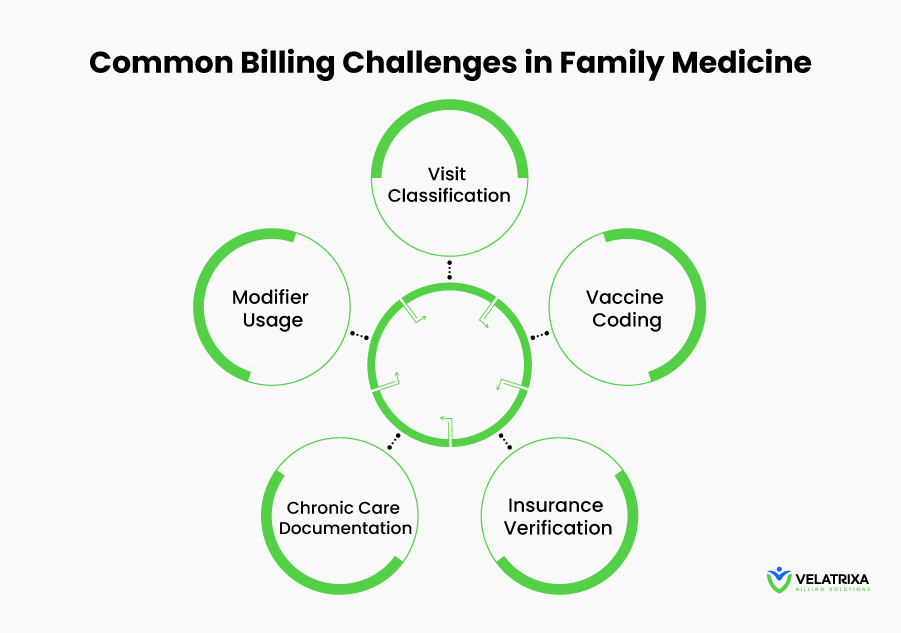
Even the most experienced family medicine practices can fall into subtle billing traps that add up to thousands of dollars in lost revenue. Understanding the most common mistakes and how to prevent them is essential to improving reimbursements, reducing denials, and keeping your practice financially healthy.
1. Incorrect Visit Classification
One of the simplest errors with the biggest impact is coding the wrong type of visit. For instance, labeling a preventive wellness check as a problem-focused visit can trigger denials or underpayment. In fact, up to 10% of first-time claim denials are caused by visit classification errors. Using structured visit checklists and standardized coding protocols helps staff classify visits correctly every time.
2. Improper Modifier Usage
Modifiers like -25, -59, and -50 tell payers whether a procedure is separate or related to another service. Misusing them can lead to denied or reduced claims. For example, failing to append -25 when billing an E/M visit alongside a procedure often causes rejections. Regular staff training and automated claim alerts can prevent these costly mistakes.
3. Outdated Vaccine Coding
Vaccine codes are constantly updated, and using outdated CPT or ICD-10 codes for flu shots, pediatric immunizations, or adult vaccines can delay or reduce reimbursement. Practices that update code books annually and double-check payer requirements see a significant drop in claim rejections.
4. Poor Chronic Care Documentation
Chronic care management (like CPT 99490) requires detailed documentation of care plans, patient progress, and time spent. Inadequate notes can easily lead to denied claims. Implementing structured templates, EMR reminders, and clear care logs ensures compliance and smooth reimbursement.
5. Insurance Eligibility Gaps
Submitting claims without confirming patient coverage is a top reason for denials. Practices that verify insurance eligibility, update patient information, and track prior authorizations can reduce denials by up to 25% while speeding up cash flow.
6. Missing Medical Necessity Documentation
Payers increasingly scrutinize whether services were medically necessary. Missing documentation for preventive exams, chronic care, or problem-focused visits can result in delays, denials, and additional administrative work. Clear, consistent documentation practices not only protect revenue but also keep your practice compliant.
Benefits of Outsourcing Family Medicine Billing
Managing family medicine billing in-house can be time-consuming, error-prone, and costly. Outsourcing to a specialized billing provider allows practices to focus on patient care while experts handle the complex, ever-changing world of coding, claims, and reimbursements.
1. Higher Clean Claim Rates
Specialized billing teams ensure that claims are accurately coded, complete, and compliant with payer requirements. Practices that outsource typically see clean claim rates increase by 20–30%, meaning fewer denials and faster reimbursements.
2. Faster Insurance Reimbursements
Outsourced billing providers have dedicated teams for claim submission, follow-ups, and payer communications. This ensures that claims are processed promptly, reducing the average reimbursement time and improving your practice’s cash flow.
3. Reduced Administrative Workload
Handling billing in-house can take staff away from patient care. Outsourcing frees your team from tedious billing tasks, allowing them to focus on improving patient experiences and maintaining quality care.
4. Expert Compliance with Payer Guidelines
Keeping up with changing CPT, ICD-10, and payer-specific rules is challenging. Billing experts stay updated on all coding updates, telehealth regulations, and documentation requirements, ensuring that your practice remains compliant and avoids costly audits or penalties.
5. Efficient Denial Management
Denied claims can quickly pile up, draining revenue and staff resources. Outsourced billing providers track, analyze, and appeal denials, recovering revenue that might otherwise be lost. This systematic approach helps practices maximize reimbursements while reducing administrative stress.
6. Scalability for Growing Practices
Whether your patient volume increases or you add new services, outsourced billing teams can scale operations quickly without the need for hiring or training additional staff. This flexibility allows practices to grow confidently without worrying about revenue cycle bottlenecks.
Key Family Medicine CPT & ICD-10 Codes
Accurate coding is the backbone of family medicine billing. Using the right CPT and ICD-10 codes ensures proper reimbursement, reduces denials, and demonstrates compliance with payer requirements.
Common Family Medicine CPT Codes (2026)
| Procedure | CPT Code | Notes |
|---|---|---|
| Preventive Visit | 99381–99397 | Age-based codes for wellness exams and check-ups |
| Chronic Care Management | 99490 | Requires 20 minutes of documented care per month |
| Flu Shot | 90686, 90674 | Quadrivalent, cell-based vaccines |
| Pediatric Immunizations | 90460–90461 | Ensure correct vaccine types and dosages |
| Geriatric Exam | 99397 | Preventive visit for patients 65+ |
| Health Risk Assessments | 96160, 96161 | Includes patient and caregiver assessments |
Tip: Using outdated or incorrect CPT codes for preventive care or chronic care management can lead to denied claims or delayed reimbursement. Keeping your coding manual and EMR updated is critical.
Essential ICD-10 Codes
Accurate diagnosis coding not only justifies medical necessity but also protects your revenue. Key codes commonly used in family medicine include:
- E11.9 – Type 2 diabetes without complications
- I10 – Essential hypertension
- Z00.00 – General adult medical examination
- R10.9 – Abdominal pain, unspecified
Stat Insight: Studies show that incorrect ICD-10 coding contributes to up to 12% of first-time claim denials in primary care (RevCycle Intelligence, 2023).
Why This Matters
Selecting the correct CPT and ICD-10 codes is not just a compliance requirement—it directly impacts your revenue cycle. Accurate coding:
- Prevents denials and underpayments
- Ensures faster reimbursement
- Supports proper documentation for audits
- Reduces administrative burden for staff
By mastering the most common codes for preventive care, chronic disease management, immunizations, and geriatric care, family medicine practices can maximize reimbursements while minimizing claim delays.
Emerging Family Medicine Billing Trends in 2026
Family medicine billing is evolving quickly in 2026, and staying ahead of emerging trends is critical for practices aiming to maximize reimbursements and minimize denials. From updated Medicare guidelines to growing telehealth services and stricter commercial payer rules, understanding these trends helps practices adapt proactively and protect revenue.
| Trend | Description | Impact on Practices |
|---|---|---|
| Medicare Preventive Care Updates | New CPT codes and documentation standards for wellness visits | Requires accurate coding to avoid denials and secure full reimbursement |
| Stricter Commercial Payer Rules | Tighter chronic care documentation and follow-up requirements | Increased need for compliance to prevent claim rejections |
| Telehealth Expansion | Updated reimbursement models and coding for virtual visits | Practices must track telehealth services carefully to ensure payment |
| Rising Payer Audits & Claim Scrutiny | More audits focused on documentation and coding accuracy | Higher risk of denials; proactive RCM strategies essential |
| Focus on Chronic Care Management | Emphasis on time-based services, care plans, and patient outcomes | Accurate documentation critical for maximizing reimbursements |
Key Takeaway: In 2026, family medicine practices must stay current with coding updates, payer policies, and emerging reimbursement models. Practices that implement proactive RCM strategies, maintain precise documentation, and leverage technology for claims management are best positioned to reduce denials, accelerate reimbursements, and optimize financial performance.
How Velatrixa Supports Family Medicine Practices
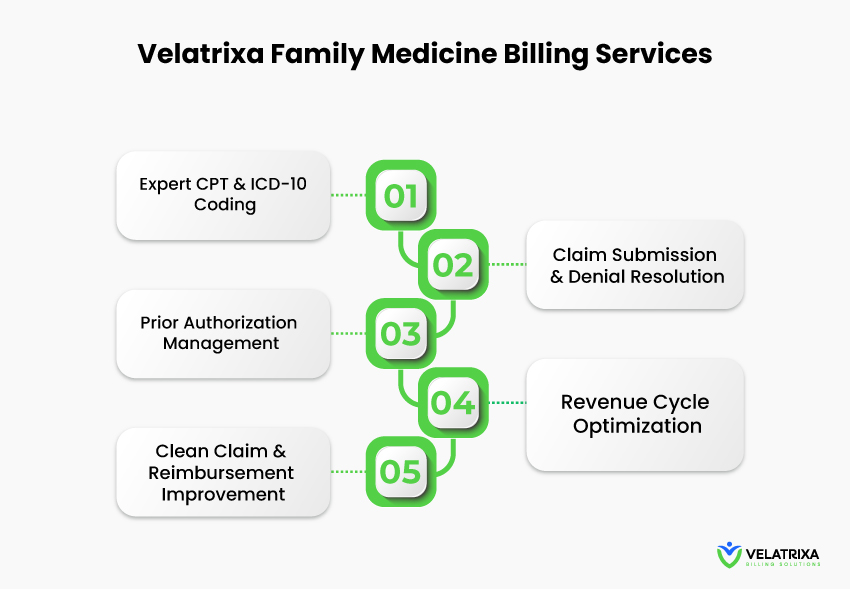
Family medicine billing is complex, and even small errors can cost practices thousands in lost revenue each month. Velatrixa simplifies the process with expert end-to-end revenue cycle management, from accurate CPT and ICD-10 coding to claim submission, denial resolution, and prior authorization support. Our team helps practices recover lost revenue, reduce denials, and accelerate reimbursements while keeping them fully compliant with ever-changing payer rules.
By outsourcing to Velatrixa, practices often see clean claim rates improve by 20–30%, faster cash flow, and reduced administrative stress, freeing staff to focus on patient care. Our solutions scale with your practice, handling higher patient volumes or new services without extra hiring. With Velatrixa, billing complexity becomes a revenue-generating advantage, allowing family medicine practices to maximize reimbursements, minimize claim delays, and operate confidently in 2026’s evolving healthcare landscape.
Conclusion
Accurate family medicine billing is essential to protect revenue, reduce denials, and maintain operational efficiency. Practices managing preventive care, chronic conditions, and acute visits rely on precise coding, strong documentation, and proactive RCM. Partnering with a specialized billing provider like Velatrixa streamlines operations, improves reimbursements, and allows teams to focus on quality patient care.
Ready to streamline your billing? Schedule a free billing assessment with Velatrixa today and uncover hidden revenue your practice may be losing.